Massacre
directed by Tommy Milliot
Du 23 January au 8 March

Discover the play
-
However, as Tommy Milliot points out, it also evokes the name given to the hunting trophy formed by the head and antlers of a deer. The winner of the 2016 Impatience prize for his staging of Frédéric Vossier’s Lotissement [Housing Estate], the young director continues his exploration of contemporary writing here after Winterreise [Winter Trip] by the Norwegian playwright Fredrik Brattberg and The McAlpine Spillway by the American playwright Naomi Wallace, due to be premiered at the 2019 Avignon Festival. For his first collaboration with the Comédie-Française, he has chosen to introduce audiences to the Catalan author Lluïsa Cunillé, a major figure in Catalan and Spanish theatre who has never been performed in France.
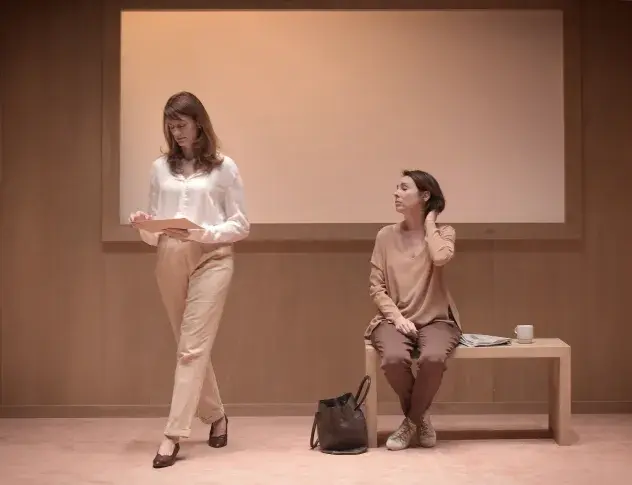
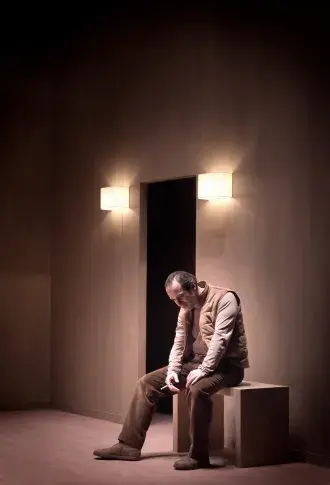
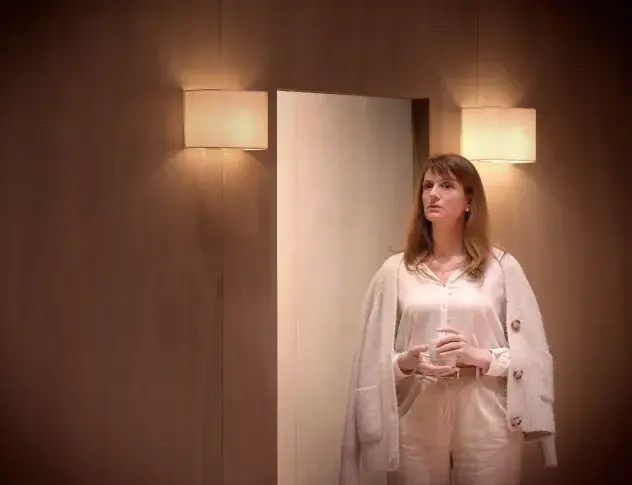
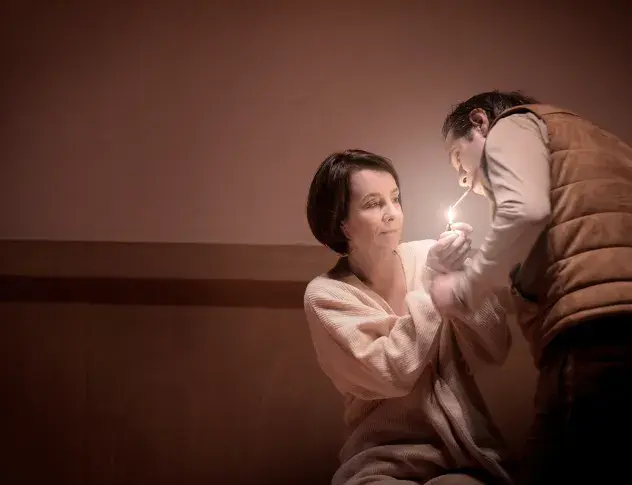
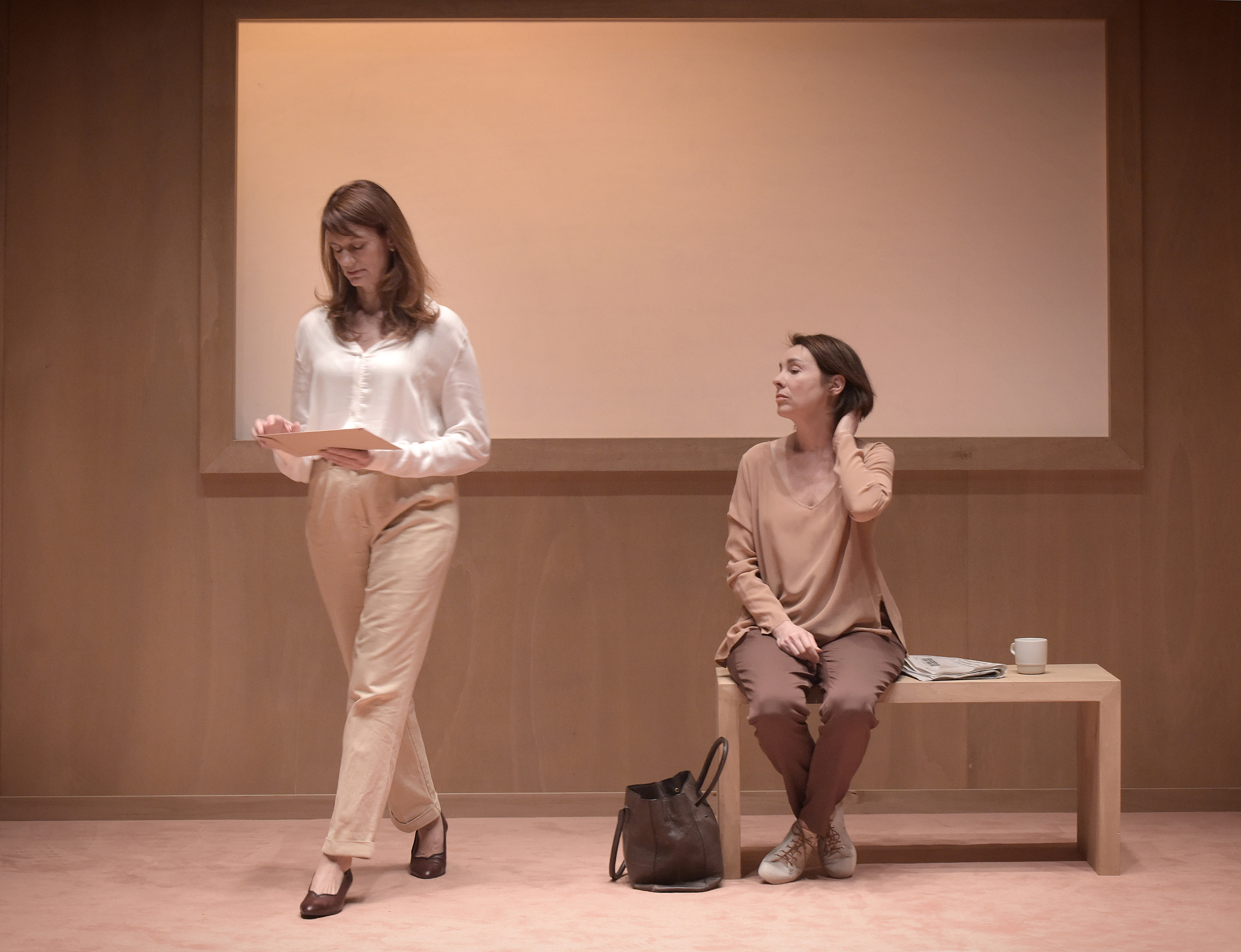
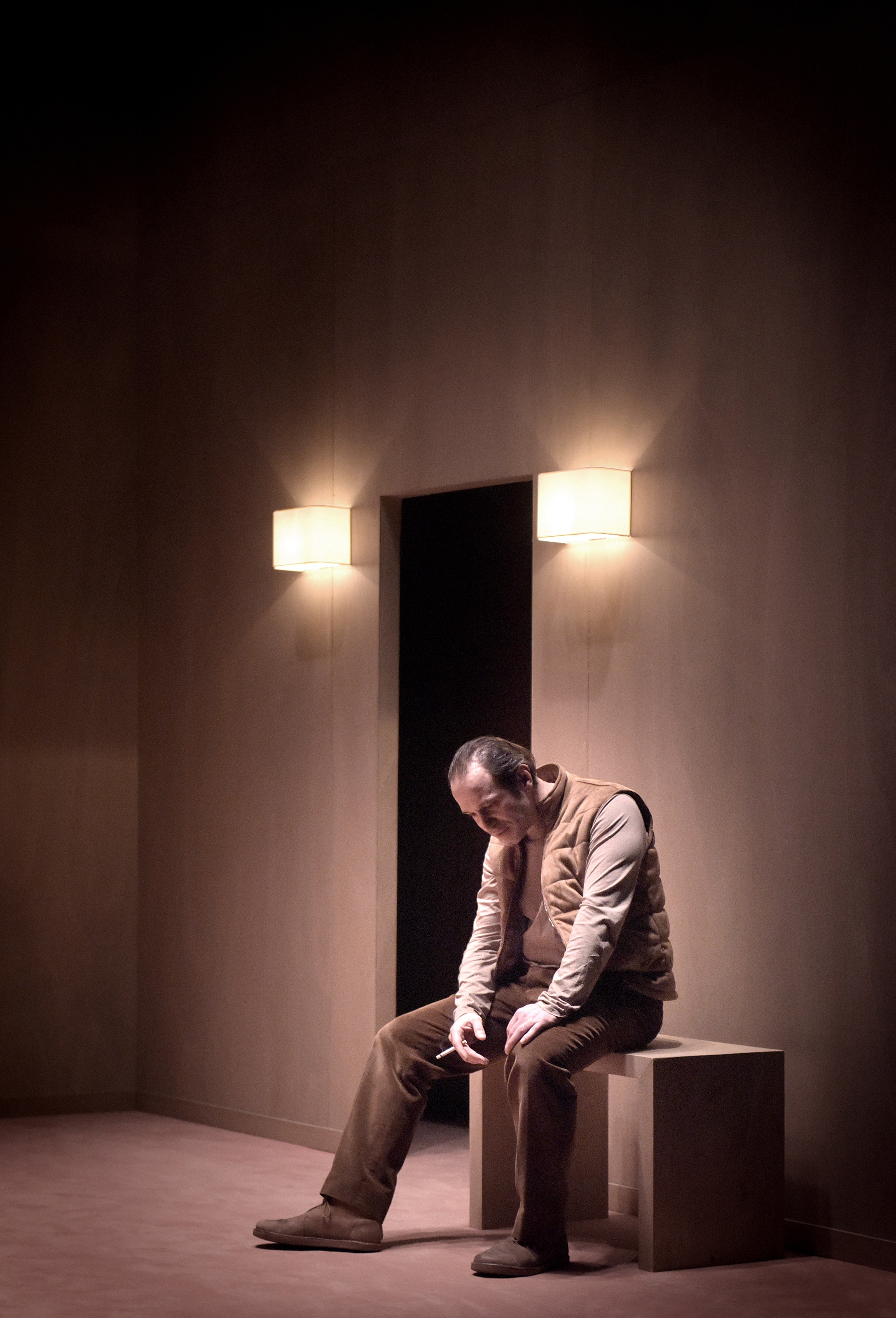
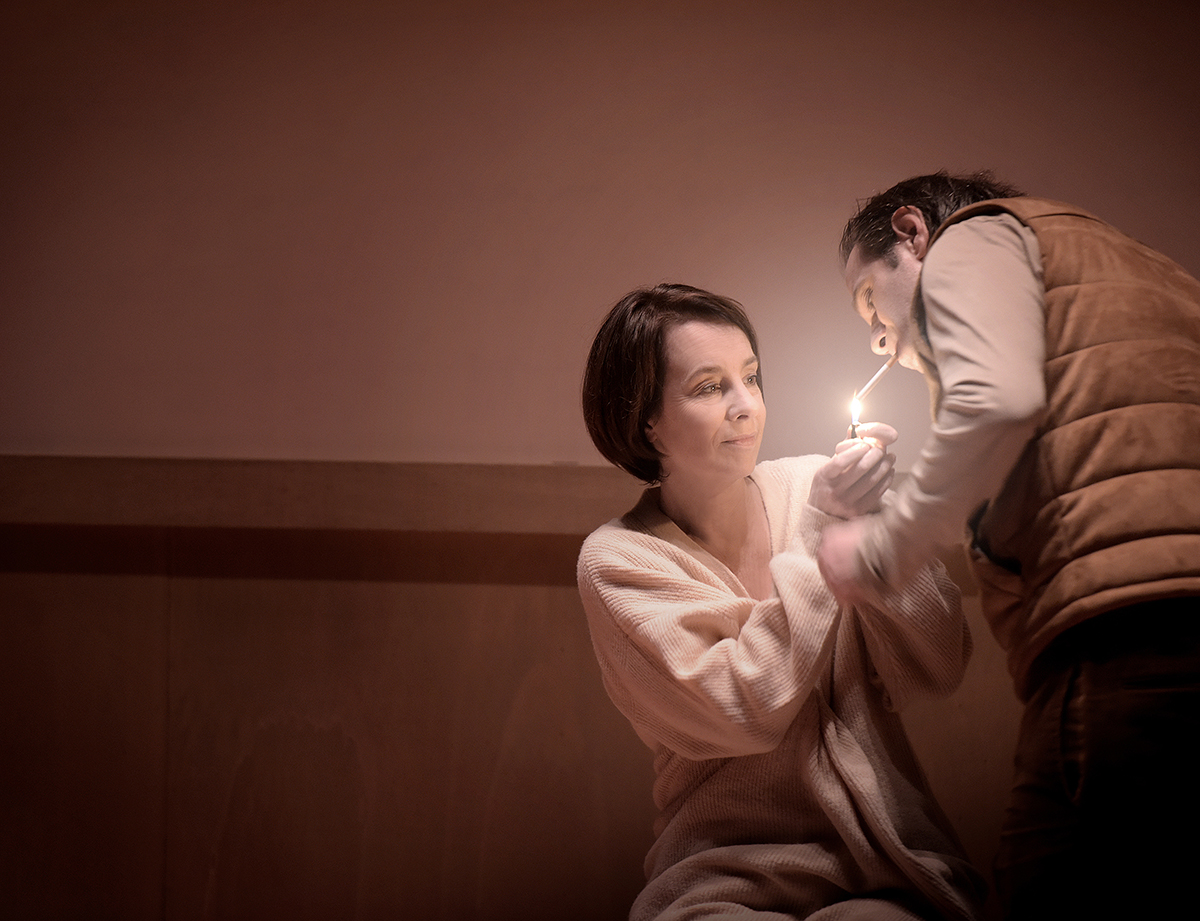
Massacre’s confined action makes it a real thriller, a suspenseful, Pinteresque piece according to the director. The play takes place in an isolated hotel, several kilometres from a village that itself seems to be in the process of being deserted. The paths of two women cross here at a pivotal moment in their lives: the first is the owner, about to close her business due to the lack of customers, while the second has booked a room there for the week and intends to stay. Like a ritual, in an atmosphere of troubling strangeness, they meet every evening in the living room. Seemingly ordinary words gradually reveal an inner turmoil, until the unexpected arrival of a man who shatters their precarious balance. An adept of an embodied theatre and a creator of images who leaves a lot to the audience’s imagination, Tommy Milliot celebrates this simple and entrancing writing.
NEW PRODUCTION
Une rencontre avec l’équipe artistique est organisée à l’issue de la représentation, le vendredi 31 JAN vers 19h40.
Entrée libre pour le bord de plateau, également pour les personnes non munies d'un billet, à la fin du spectacle.PRESSE
« Tout se passe loin de tout, dans le salon d’un hôtel des solitudes. Sur la scène du Studio de la Comédie-Française, le metteur en scène Tommy Milliot nous fait découvrir cette autrice réputée en Espagne. Dirigés avec tact, les acteurs de la maison la servent à la perfection. »
Médiapart« Après son succès au dernier Festival d'Avignon, Tommy Milliot confirme son talent avec ce huis clos anxiogène signé Lluïsa Cunillé. »
Les Inrocks« Grâce à un jeu subtil, précis, et à une mise en scène à l’avenant, le mystère du huis-clos Massacre se déploie dans tout le Studio de la Comédie-Française. »
Sceneweb.fr« Du début à la fin, on est pris par l'indéniable force d'attraction de l'écriture de Lluïsa Cunillé »
Le MondeIn the theatre, the use of an in camera spatial device confines characters together in a single setting from which they cannot leave. Strictly speaking, there are few such spaces in the theatrical repertoire. Classical tragedy, constrained by the rule of unity of place, most often situates its action in a palace chamber or antechamber where the characters pass and circulate, but where they also report the external events that advance the plot and, sometimes, cause it to change course. The in camera condition is therefore only relative. Some plays, however, harness the psychological dimension of the motif. Lluïsa Cunillé’s Massacre exploits both dimensions. First, by depicting a single location (a hotel lounge), which three characters enter and exit, returning irremediably. The relationship that develops between the two women gradually makes this setting indispensable as a confrontational mental space: one is unsuccessfully trying to leave, the other wants to move in permanently. The lounge where they experience their relative isolation is also the metaphor for an entire region subject to the vagaries of tourism, a region mysteriously deserted by its inhabitants, attracting and repelling at the same time. As in most dramas of confinement, balances that were painstaking to establish are upset by the arrival of a third party, a symbol of an elsewhere that makes the constrained situation unbearable.
Confined spaces are a choice terrain for playwrights who wish to observe human relationships and behaviour, which express themselves more truthfully in a closed environment. For example, through master/slave or male/female dynamics and relations of domination, Marivaux explores these spaces of confinement as places where hierarchies can finally be overcome.
Some settings and societies are particularly conducive to this approach: islands, but also prisons, or religious communities. The pressure that confinement exerts on the individual is as much a result of the enclosed setting as it is of the psychological burden it creates, while the inaccessible exterior generates anxiety and desire. In Federico García Lorca’s The House of Bernarda Alba, the matriarch locks up her daughters for an eight-year mourning period, driving them to brave all taboos, which ultimately leads to the suicide of the youngest woman, who succumbs to the temptation coming from the outside to seduce a man. Confinement, incarceration and fluctuating power relations are among Jean Genet’s favourite themes, namely in Haute surveillance or Les Bonnes. Reclusion, dependence, domination and servitude are at the heart of modern uses of this device, for which Sartre’s play, Huis clos, is the model.“Exiting” from the confined space is a moment of great tension in contemporary theatre: Dea Loher’s Innocence, Lars Norén’s Poussière, Les Damnés after Visconti directed by Ivo van Hove, all plays that have recently been added to the Comédie-Française repertoire, are ensemble pieces that exclude “temporary exits”. All the characters are present on stage from the beginning of the play, and only leave it to die.
In Massacre, on the contrary, the final “accident” enables the characters to leave the hotel and imagine another future. In this respect, Lluïsa Cunillé’s play offers a fresh perspective on this recurring theme in the dramatic repertoire.- Huis clos, 1990, Aumont, Dubois - photo. Claude Bricage © Coll. Comédie-Française
-
Translation : Laurent Gallardo
Staging and scenographiy : Tommy Milliot
Light design: Sarah Marcotte
Sound design: Adrien Kanter
Dramaturgy: Sarah Cillaire
Assistant stage manager: Matthieu Heydon
Documents
-
 Télécharger le PDF (678.82 KB)
Programme Massacre 19/20
Programme de Massacre. Mise sen scène et scénographie Tommy Milliot. Studio-Théâtre.
Casting
-
-
and
Miglen Mirtchev: A (alternately)