
La Comtesse d'Escarbagnas
artistic direction Noam Morgensztern
From 13 June to 13 June

Discover the play
-
Il reprend un sujet à la mode, et fait, sous les traits de la comtesse d’Escarbagnas le portrait, satirique, des nobles de province. Reconnue comme le pendant féminin de Monsieur de Pourceaugnac, cette riche veuve d’Angoulême revient d’un voyage à Paris et se vante d’y avoir appris les bonnes manières, qu’elle tente tant bien que mal, et avec autorité, d’imposer dans sa maison. Il y a du Monsieur Jourdain dans l’attitude de cette femme vaniteuse et naïve. Elle est notamment utilisée par son amie Julie et le Vicomte, qui sont épris l’un de l’autre mais dont l’amour est contrarié par une brouille entre leurs familles. Le Vicomte est cependant soupirant en titre de la comtesse. Quand le Bourgeois gentilhomme est poussé par Dorante à organiser un divertissement pour la belle Dorimène – que tous deux convoitent –, c’est ici Julie qui oblige son amant à arranger un divertissement chez sa dite amie. La satire des précieuses de province, qui font rire la noblesse de cour, est aussi celle de la cruauté de nobles sans vergogne, et la comédie s’assombrit de leurs désobligeances. À la table en public, cette représentation filmée est l’occasion d’être au plus près des mots de Molière, et du comique des situations. »
Noam Morgensztern
Avec le soutien de la Fondation pour la Comédie-Française et le mécénat de François Jerphagnon
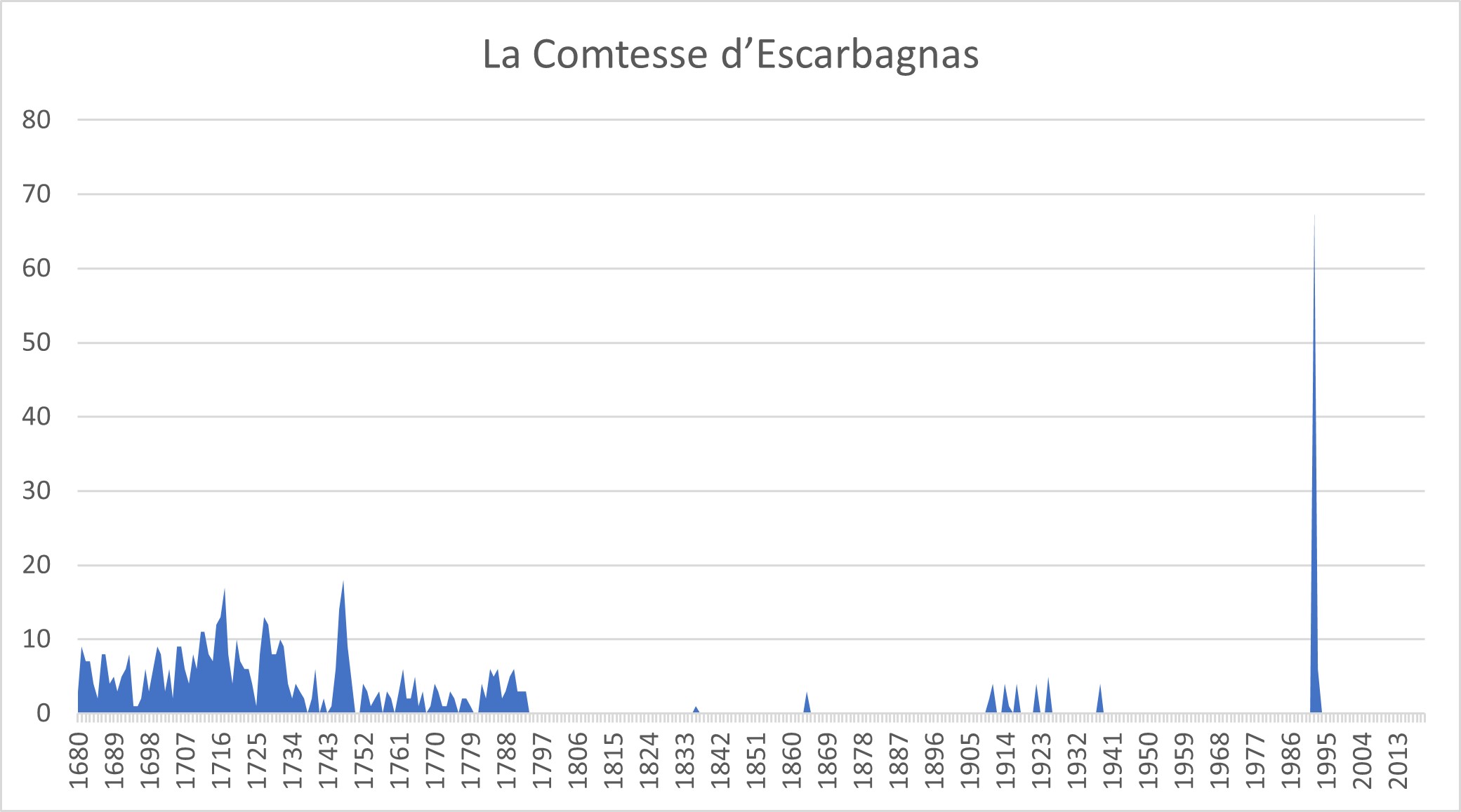
Comme pour L’Impromptu de Versailles, Molière joue sur la mise en abyme théâtrale dans La Comtesse d’Escarbagnas, impromptu de circonstance qu’il n’avait pas prévu de publier et qui répondait à la commande d’un grand divertissement par Louis XIV en l’honneur de la princesse palatine. Pour cette pièce initialement intitulée Le Ballet des ballets, Molière commanda une ouverture à Marc-Antoine Charpentier et mit en scène une fête de cour transposée dans le salon d’Escarbagnas, dame d’Angoulême. Jouée par l’auteur au Palais-Royal en guise de prologue à d’autres petites pièces, La Comtesse d’Escarbagnas ̶ comédie en un acte et en prose ̶ connut une fortune assez enviable jusqu’à ce que la Révolution ne lui porte un coup d’arrêt à partir de 1794.
Elle renaît de ses cendres pour trois représentations en 1864, puis sporadiquement au début du XXe siècle, notamment en 1922 (année du tricentenaire de la naissance de Molière), puis en 1938 et surtout en 1992, grâce à la volonté de Jacques Lassalle pour qui la Comédie-Française doit être la Maison de « tout » Molière. La pièce est alors suivie de George Dandin. En s’appuyant sur une tradition tardive, il confie le rôle de la comtesse à Jean-Luc Bideau, accentuant ainsi la folie de cette pièce peu connue, jouée 653 fois à la Comédie-Française.Les metteurs en scène de la pièce au XXe siècle :
- 1922 : Georges Berr
- 1938 : André Bacque
- 1992 : Jacques Lassalle
-
Direction artistique : Noam Morgensztern
Réalisation : Clément Gaubert
Casting
-
le Vicomte, amant de Julie
-