La Locandiera
by Carlo Goldoni
Directed by Alain Françon
From 27 October to 10 February

Discover the play
-
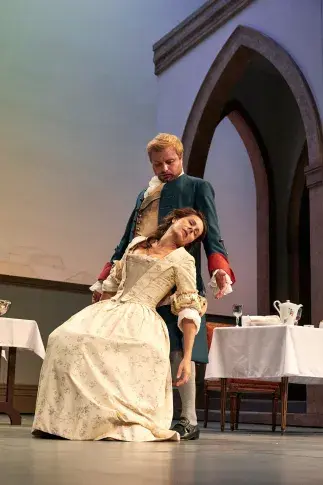
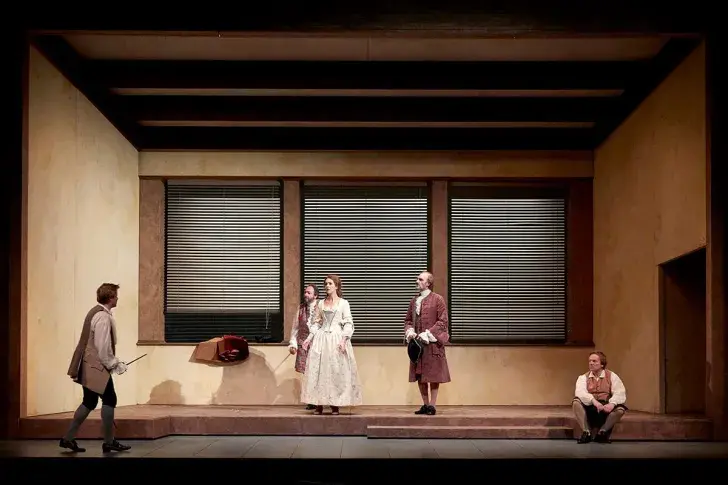
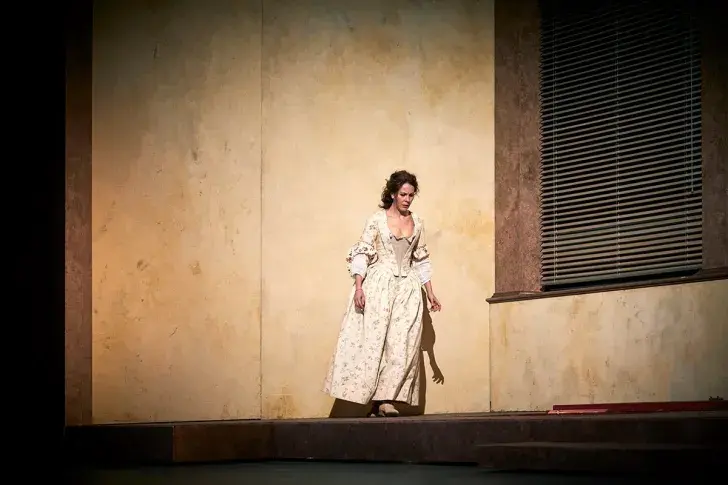
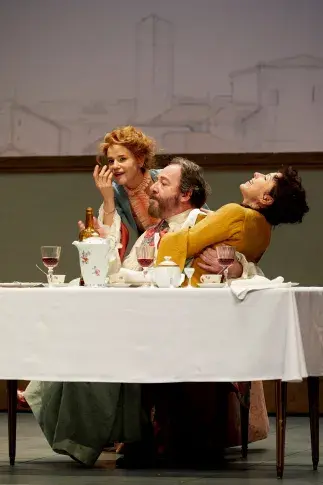
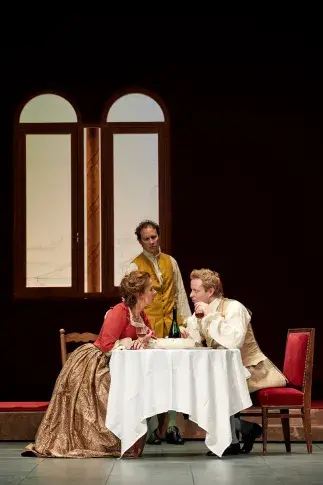
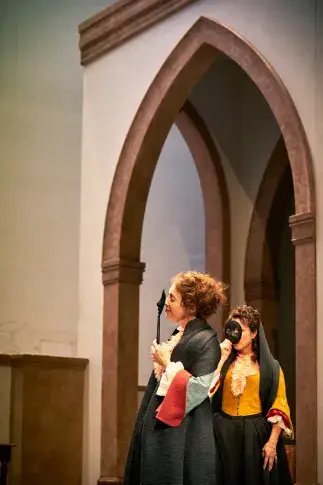
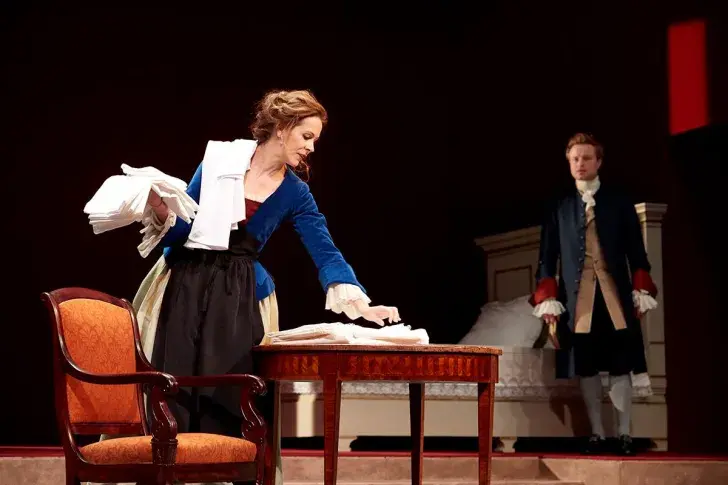
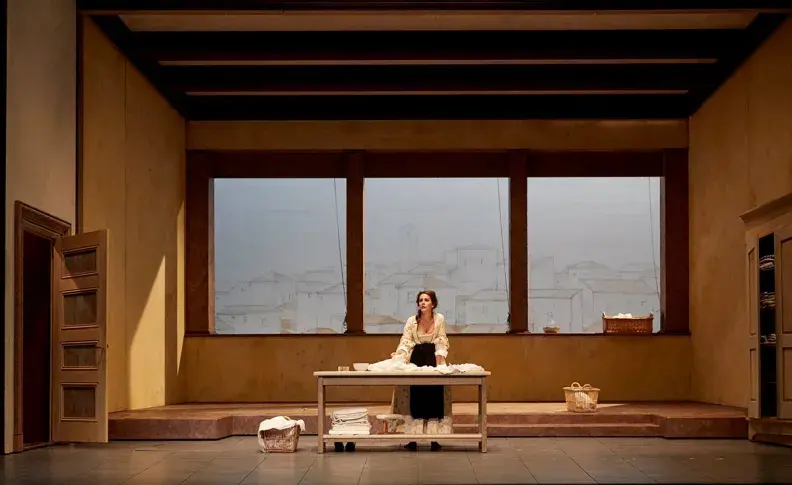
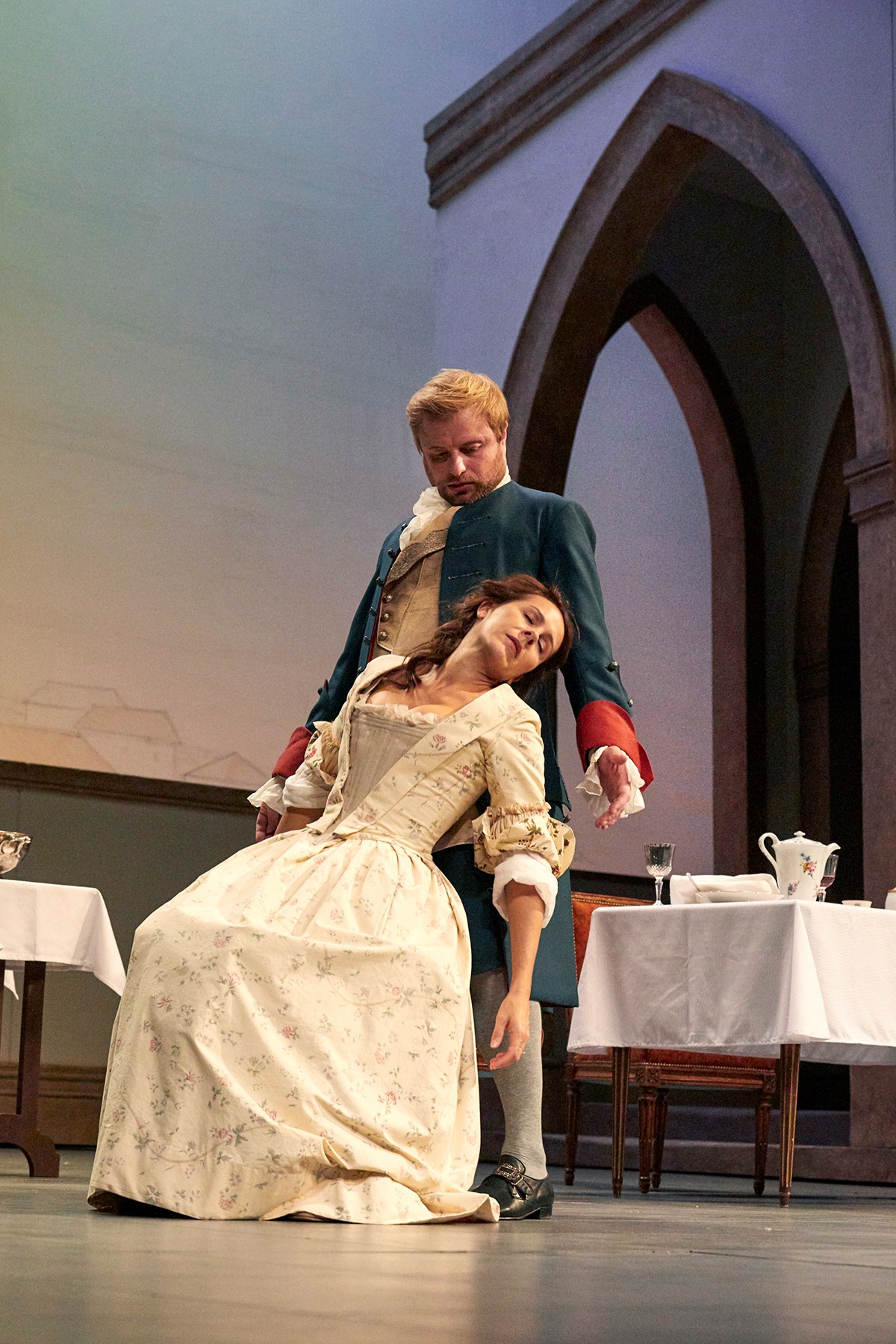
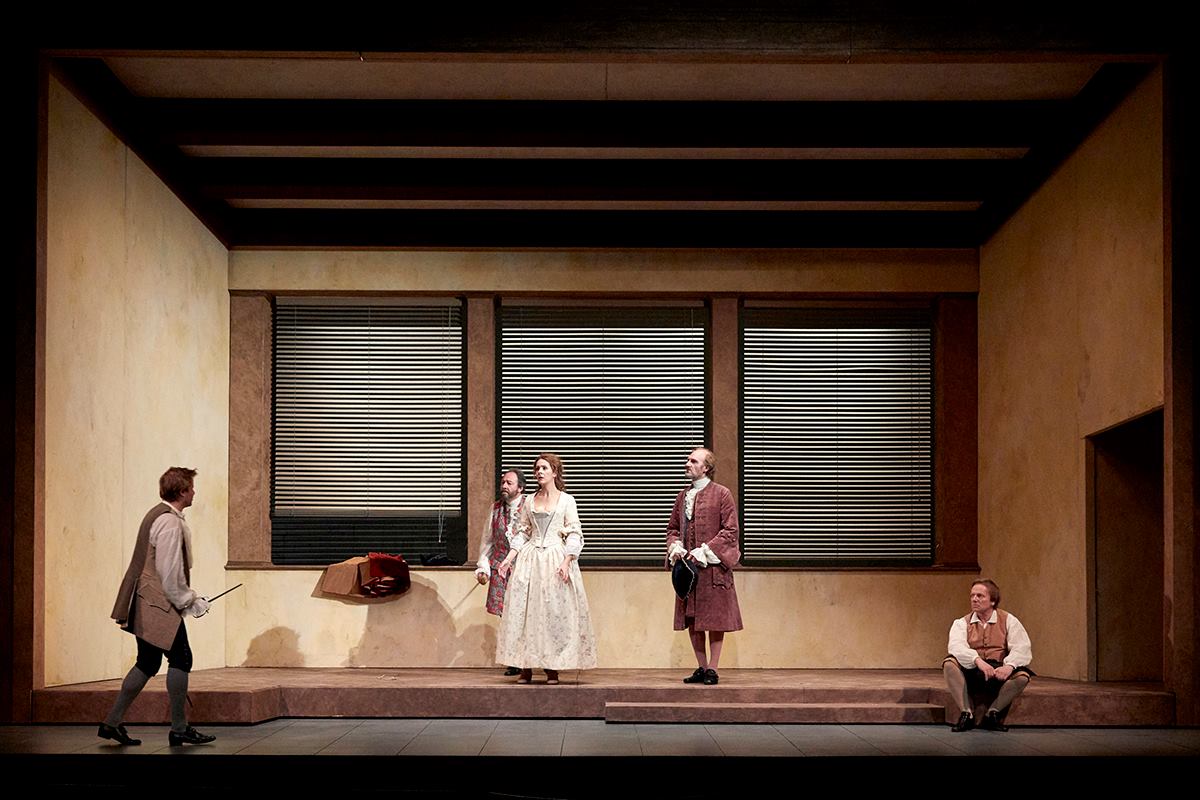
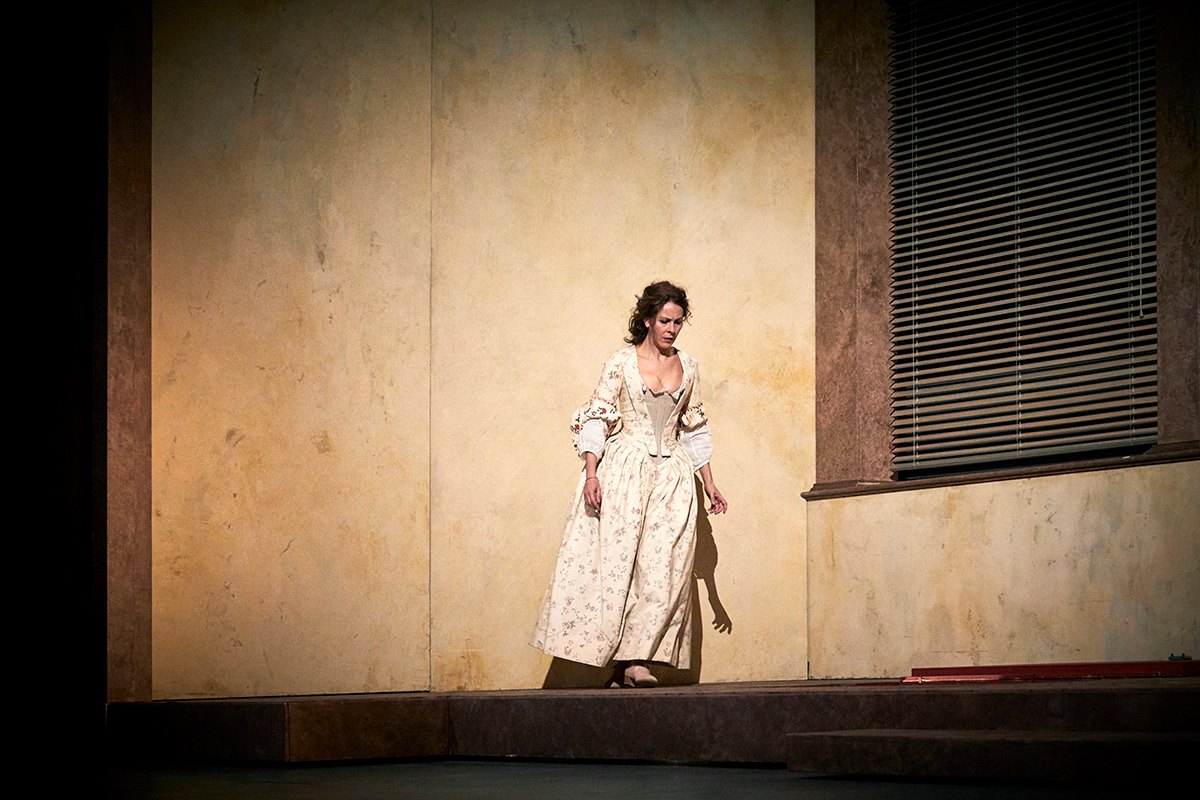
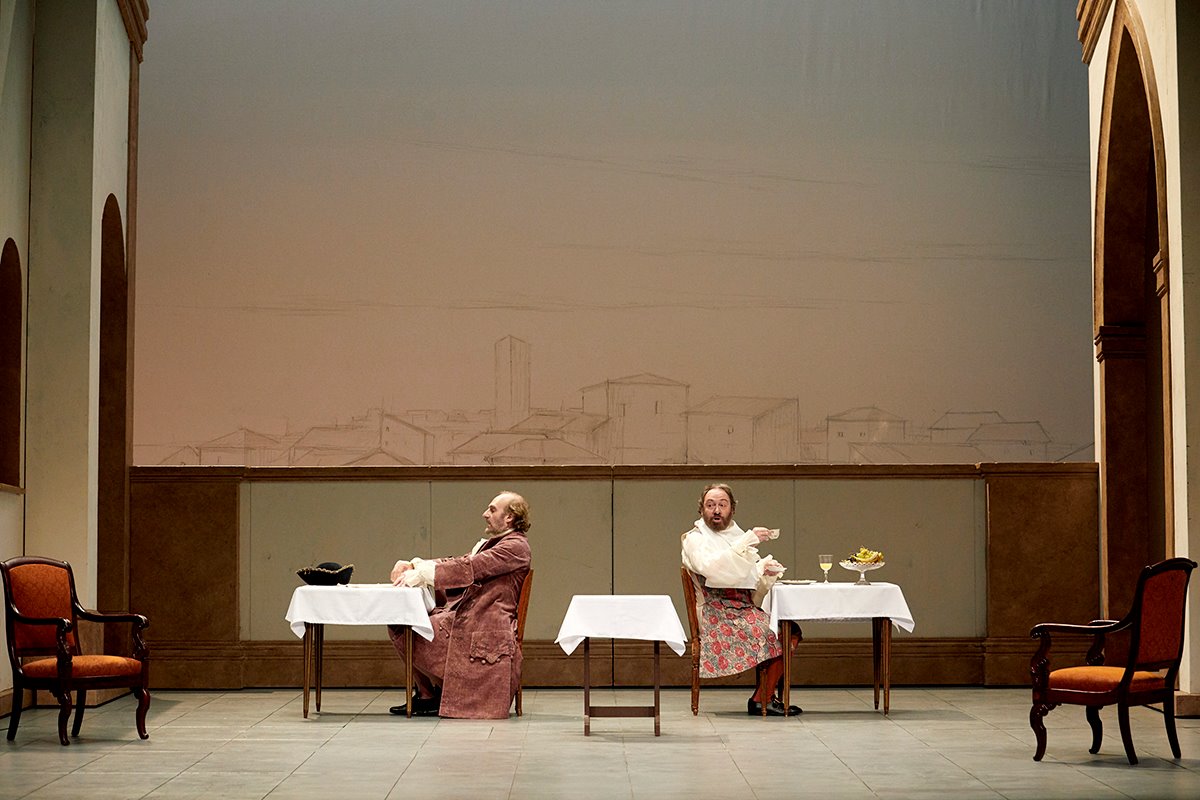
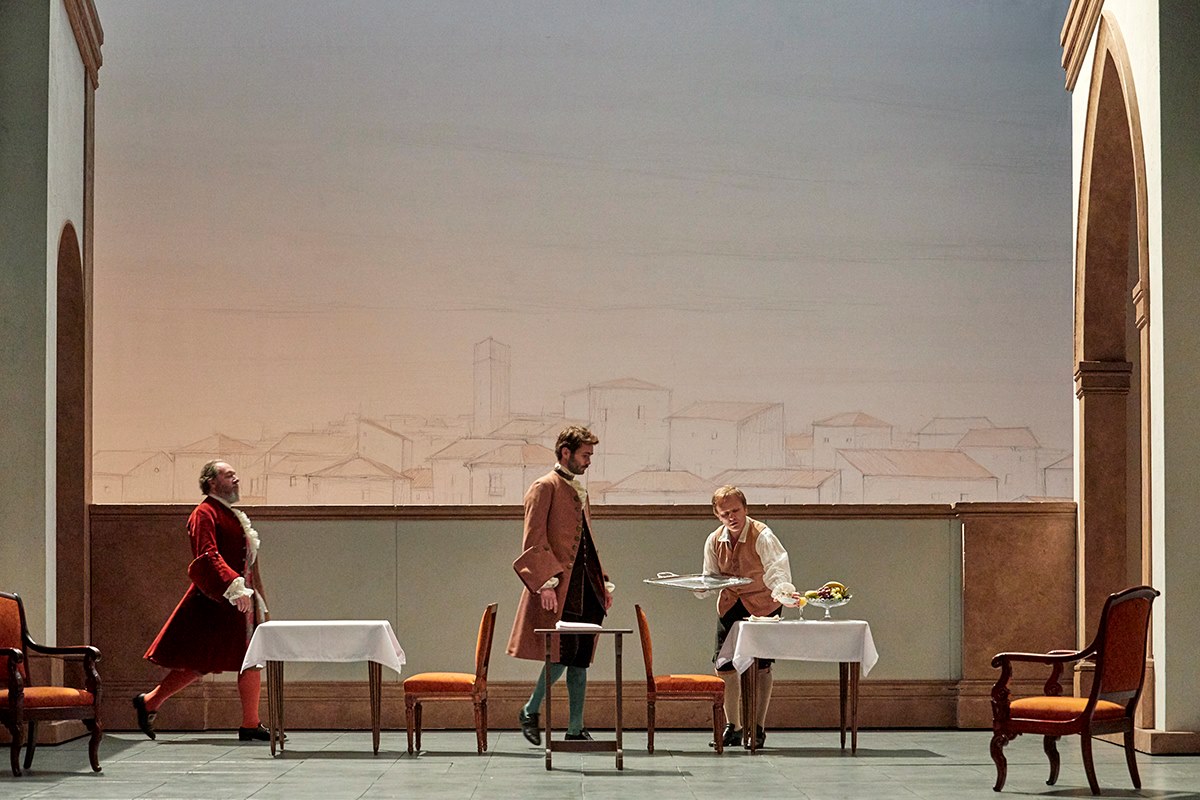
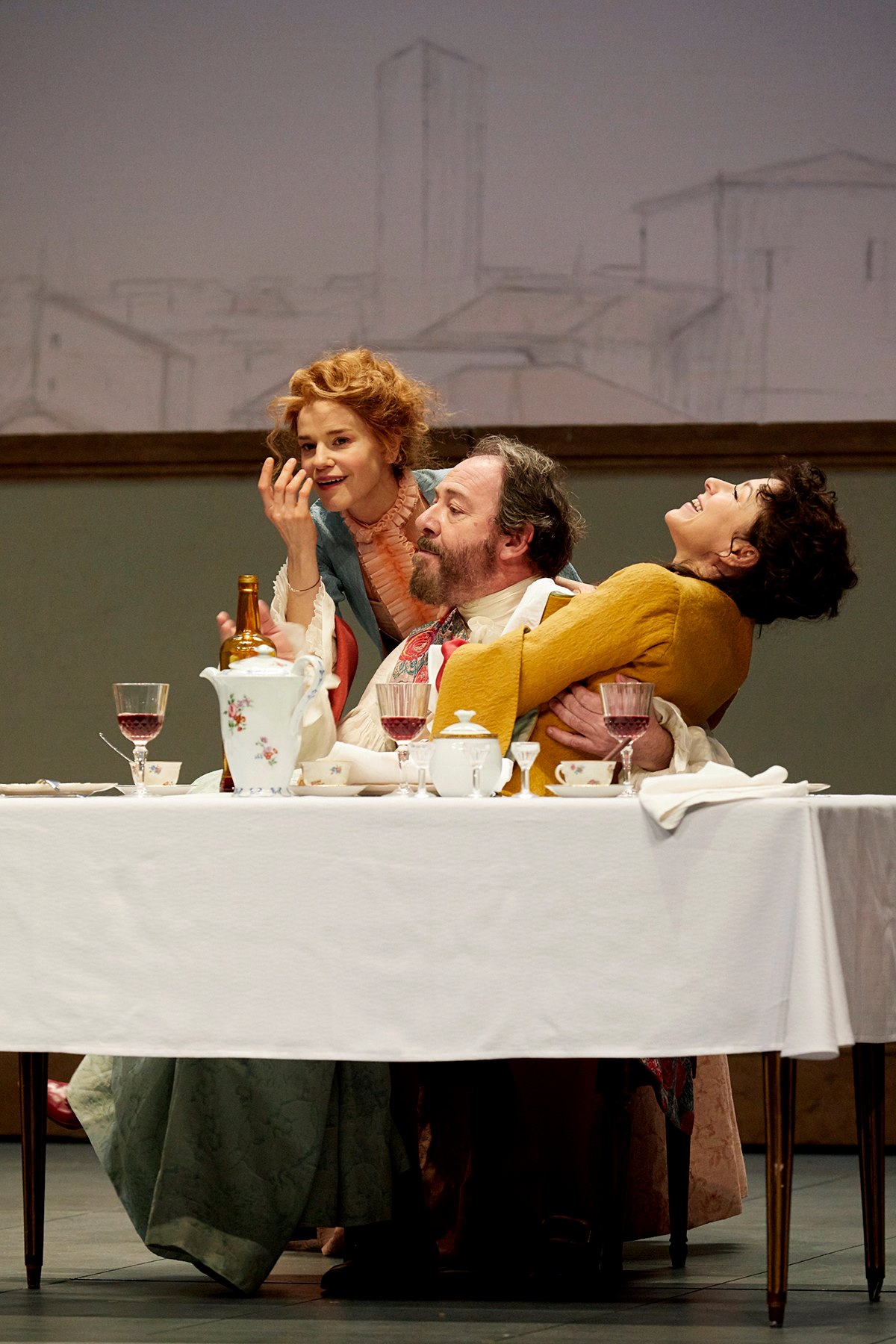
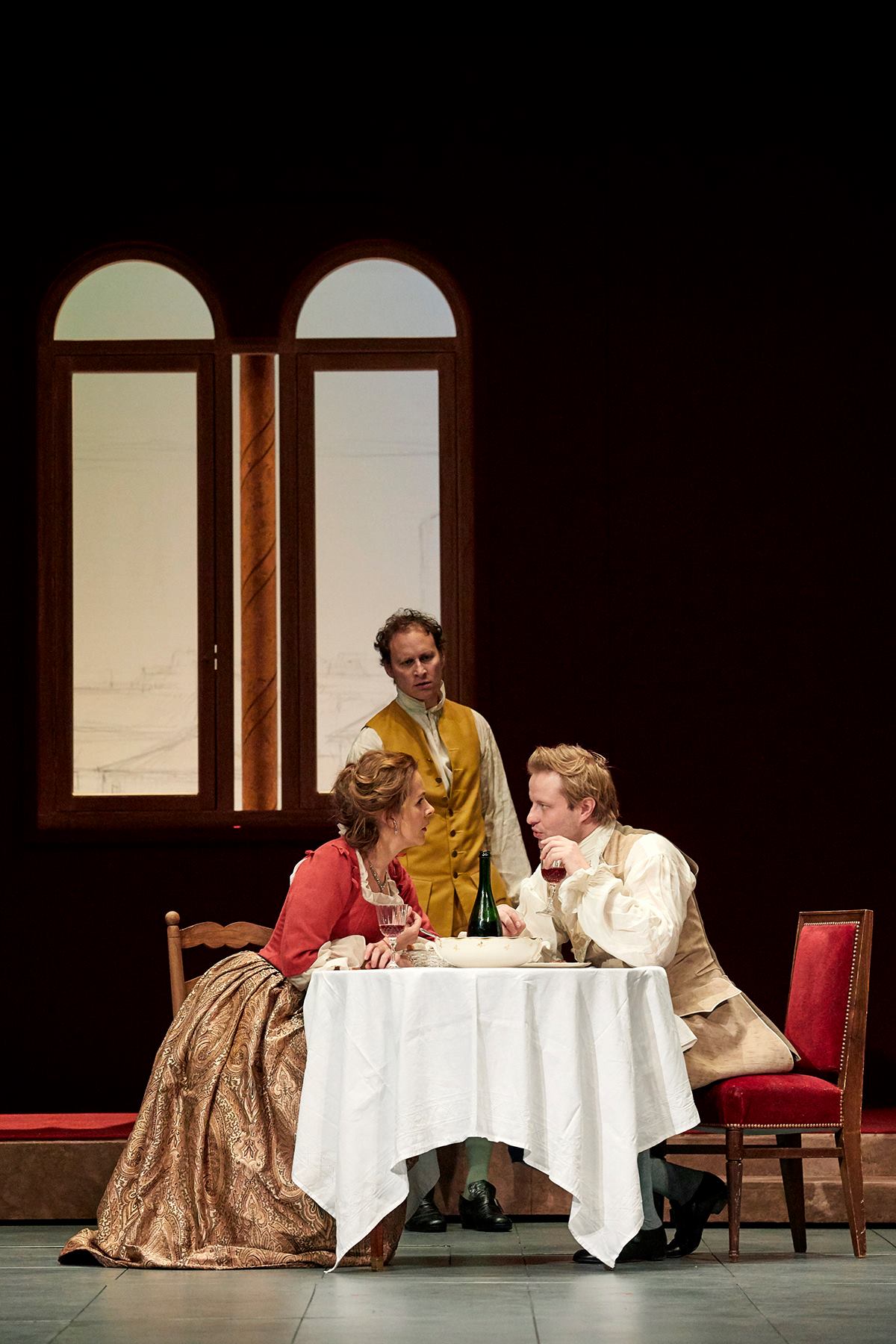
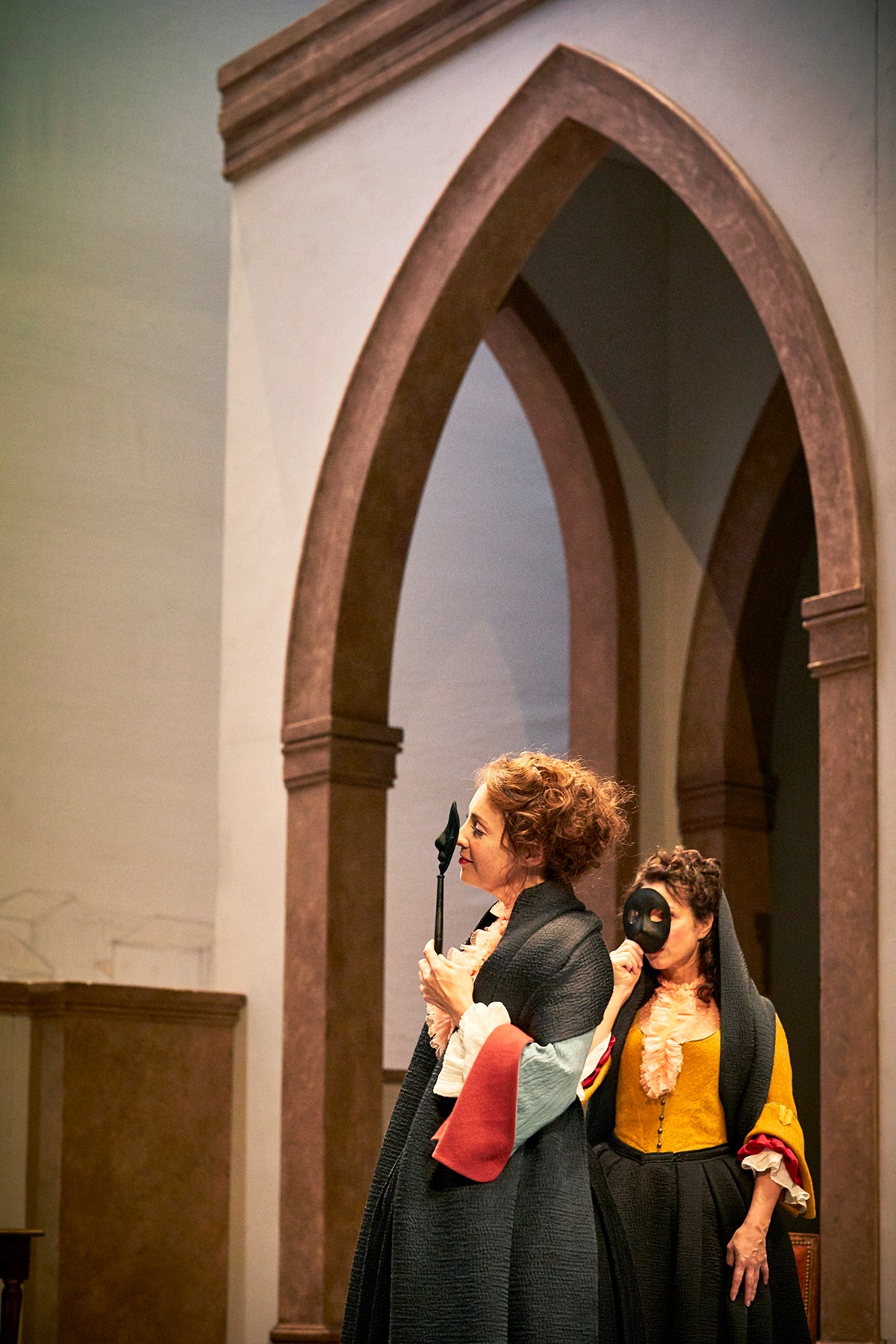
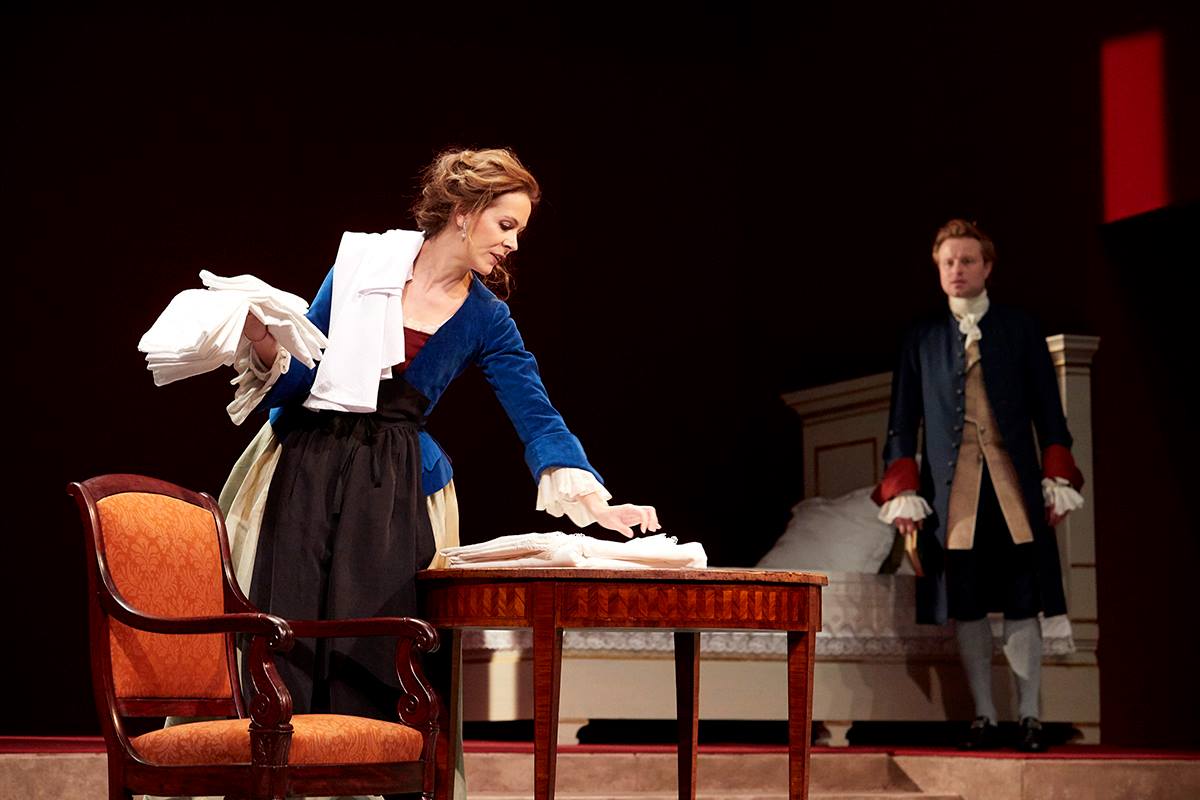
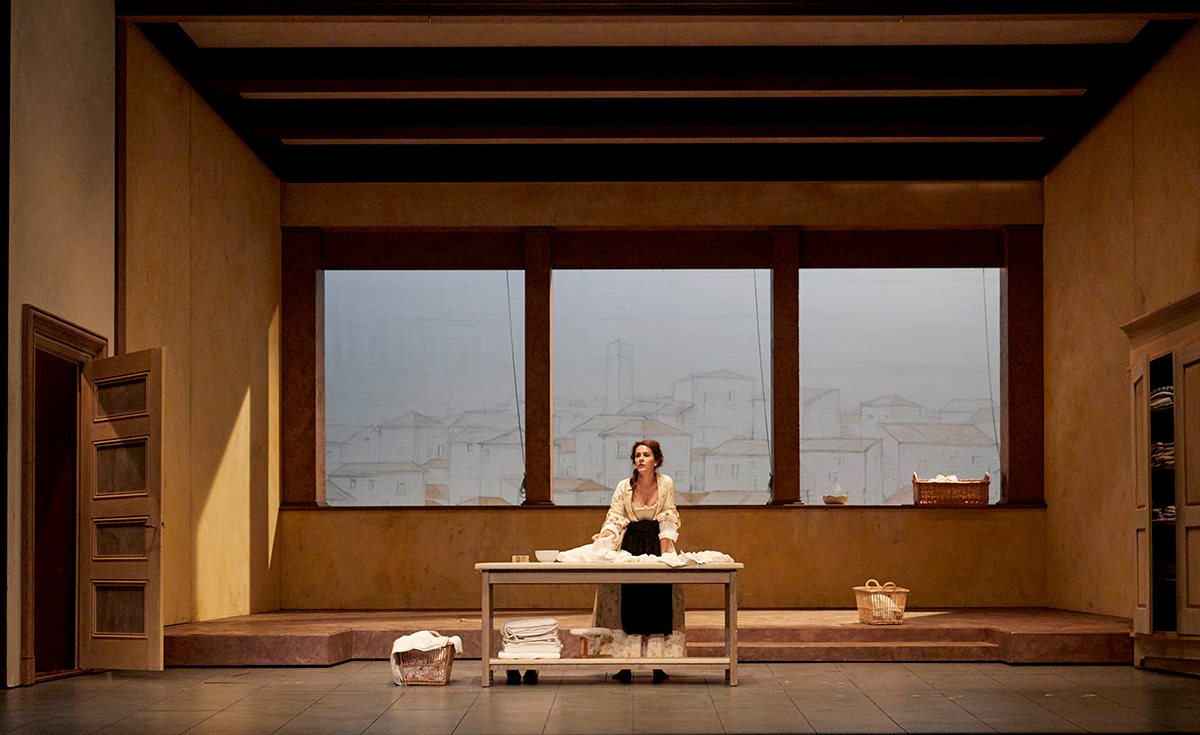
« Je n’ai peint nulle part ailleurs une femme plus séduisante, plus dangereuse que celle-ci », prévient Goldoni dans sa préface à La Locandiera. Avec Mirandolina, il crée l’un des premiers rôles-titres féminins dans l’histoire de la Comédie Italienne, relevant de surcroît de l’emploi des servantes. Assurément, cette femme d’esprit a un charme naturel redoutable auquel succombent les voyageurs qui séjournent dans son auberge, notamment un comte et un marquis. Mais leur concurrence est bientôt perturbée par la présence d’un chevalier dont la misogynie et les manières sauvages agacent la jeune femme et aiguisent sa sensibilité : elle n’aura d’autre rêve que de conquérir son cœur et d’assouvir ainsi son propre désir de vengeance. « Sirène enchanteresse » au caractère frivole, héroïne d’une pièce féministe a-t-on pu dire, la Locandiera outrepasse toutefois ces catégories. Entre l’incarnation du verbe avoir (le Comte, qui a acheté son titre) et celle du verbe être (le Chevalier), Mirandolina affirme le concept de liberté, la réussite par le travail : elle incarne le verbe faire, comme l’explique Myriam Tanant qui signait ici sa dernière traduction.
Dans le prolongement d’un compagnonnage initié en 1986 avec la Troupe qu’il met ici en scène pour la neuvième fois, Alain Françon révèle la grâce incomparable de cette œuvre qui tient à la fois de la complexité des sentiments, des classes sociales et des genres.Représentation exceptionnelle en matinée mercredi 14 NOV, 14h
NOUVELLE PRODUCTION
Avec le mécénat d’August Debouzy
LA LOCANDIERA, créée à Venise en janvier 1753 au Théâtre Saint-Ange, est interprétée par la soubrette de la troupe, Maddalena Marliani, considérée comme la meilleure actrice italienne de son temps. Le public parisien découvre la pièce à la Comédie-Italienne en 1764, mais dans une version très différente, élaborée par Goldoni lui-même, sous le titre Camille aubergiste. À la fin du XIXe siècle, la Duse et la Ristori, interprètes italiennes majeures, reprennent toutes deux le rôle et le jouent en tournée à l’étranger. Catulle-Mendès, témoin de la première « étourdissante de gaité », déplore une dramaturgie qui ne soutient pas la comparaison avec Molière. En France, il faut attendre 1912 pour la voir mise en scène, par André Antoine à l’Odéon, dans une adaptation de Julie Darsenne, utilisée également par Jacques Copeau, en 1923, au Théâtre du Vieux-Colombier. La mise en scène de Copeau est un hommage à la Duse, qui voulait que Goldoni soit interprété avec « brio, brio, brio ». La tradition de volubilité a encore de beaux jours devant elle.
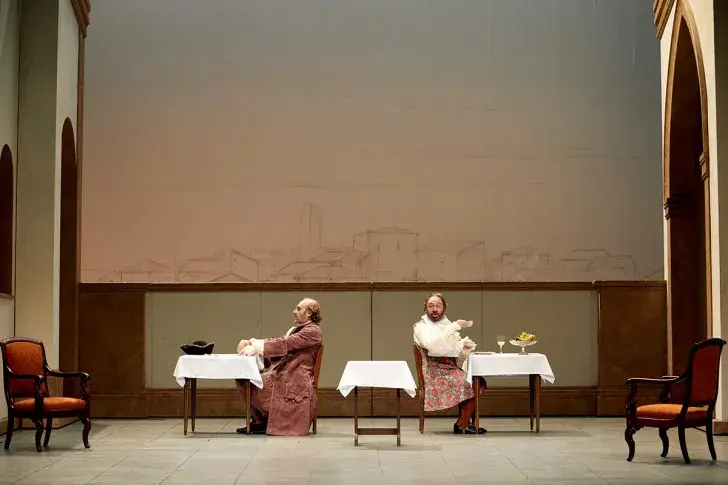
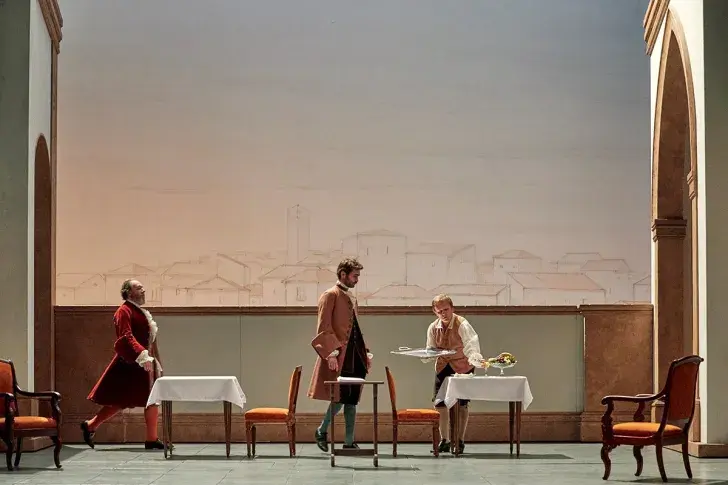
En 1952, Luchino Visconti met la pièce en scène à la Fenice de Venise. Cette version, très discutée, prend l’exact contrepied de la tradition d’interprétation encore marquée par les codes de la commedia dell’arte : jeu lent, sobriété de la gestuelle, voix dépourvues de la musicalité habituelle que l’on prête à Goldoni, costumes silhouettés dépourvus d’ornements superflus, rigueur des décors conçus par Visconti et Piero Tosi, inspirés par l’œuvre du peintre Giorgio Morandi dont l’influence est également perceptible dans l’éclairage. Le spectacle peut être vu du public parisien, en 1956, dans le cadre du Théâtre des Nations.
La lecture de Goldoni se trouve bouleversée par cette interprétation : les aspects sociaux, psychologiques sont privilégiés aux dépens de l’image pittoresque traditionnelle. On parle d’une mise en scène « matérialiste », voire « marxiste ». Les critiques françaises sont assez virulentes. On reproche à Visconti d’avoir adopté un réalisme excessif et renoncé à une certaine « italianité ».
Alors que la France découvre les mises en scène de Strehler dans les années 1970 – notamment avec La Trilogie de la villégiature jouée par les Comédiens-Français à l’Odéon, en 1978 –, la critique oppose souvent les deux maîtres, Strehler offrant une lecture moins radicale respectant un certain équilibre entre « jeu » et « réalité ».
Jacques Lassalle monte La Locandiera à la Comédie-Française, en 1981, conciliant les deux traditions.
Alain Françon quant à lui se situe dans le sillage de Visconti et reprend à son compte une interprétation sociale et un portrait de femme, qui a conscience de sa juste place au sein d’une société hiérarchisée et cloisonnée, finalement assez proche de la nôtre.
- Visuel : La Trilogie de la villégiature de Carlo Goldoni, adaptation et mise en scène de Giorgio Strehler, 1978 – photo. Claude Angelini, coll. CF
-
Mise en scène : Alain Françon
Traduction : Myriam Tanant
Scénographie : Jacques Gabel
Costumes : Renato Bianchi
Lumières : Joël Hourbeigt
Musique originale : Marie-Jeanne Séréro
Son : Léonard Françon
Dramaturgie et assistanat à la mise en scène : David Tuaillon
Documents
-
 Télécharger le PDF (1.36 MB)
Programme La Locandiera 18/19
Programme de La Locandiera, de Carlo Goldoni. Mise en scène Alain Françon. Salle Richelieu (saison 2018/2019). -
 Télécharger le PDF (16.68 MB)
La pièce en images - La Locandiera 18/19
Goldoni et le malentendu français